
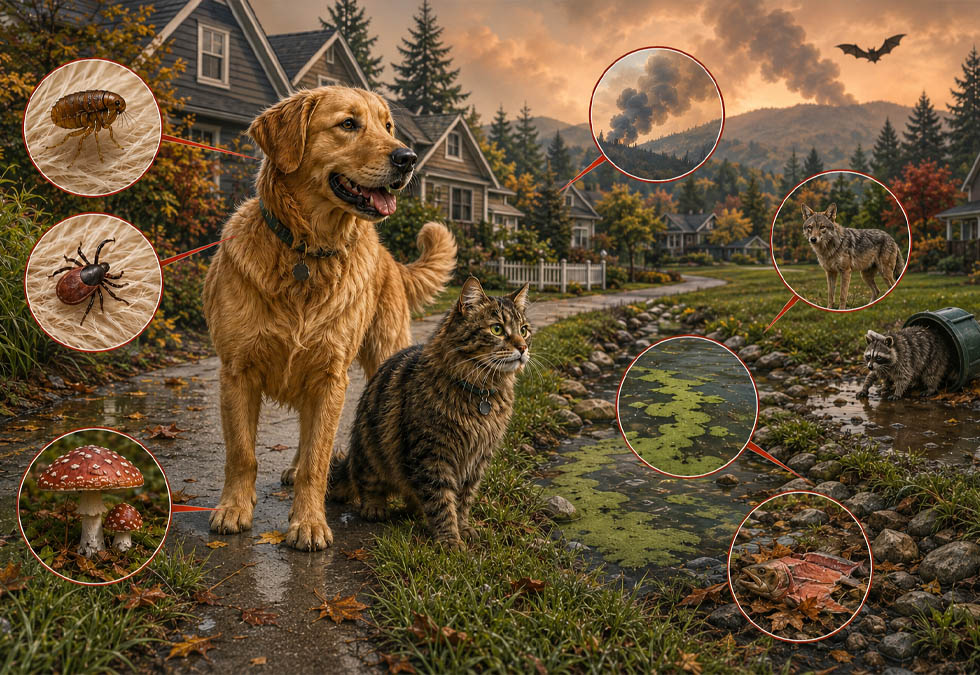
Fall offers cooler weather and beautiful scenery, but it also brings seasonal health risks for Oregon’s companion animals. Pet owners should be especially alert to parasites, contaminated water, salmon poisoning, toxic mushrooms, wildfire smoke, and wildlife encounters.
Fleas, ticks and other parasites
Oregon’s cooler, fall weather does not end parasite season. Fleas may survive year-round, especially inside heated homes. Ticks can remain active during mild weather.
Continue using veterinarian-recommended flea and tick prevention after summer. Never use a flea or tick product intended for dogs on a cat unless a veterinarian confirms it is safe. Some canine products are highly toxic to cats.
Check pets after outdoor activities, paying particular attention to the ears, neck, armpits, groin and toes. Oregon-specific flea guidance is available from the Oregon Veterinary Medical Association.
Pets may also encounter Giardia and other intestinal parasites in untreated water. Persistent or recurring diarrhea should be evaluated by a veterinarian.
Harmful algae in waterways
Toxic cyanobacteria, often called blue-green algae, may remain in Oregon lakes, rivers and reservoirs into fall. Dogs can become seriously ill after drinking contaminated water, swallowing it while swimming or licking it from their coats.
Symptoms may include vomiting, drooling, weakness, staggering, seizures or difficulty breathing. If exposure is suspected, prevent the pet from licking its coat, rinse it with clean water if this can be done safely and contact an emergency veterinarian immediately.
Avoid water that looks foamy, scummy, pea-green or paint-like. Because contaminated water may sometimes appear clear, check current Oregon Health Authority’s current cyanobacteria advisories. before visiting a waterway.
Leptospirosis and standing water
Rain creates puddles and muddy areas that may be contaminated by urine from rats, raccoons and other wildlife. Dogs exposed to contaminated water or soil can develop leptospirosis, a bacterial infection that may damage the kidneys and liver. It can also infect people. Ask your veterinarian whether your dog should receive a leptospirosis vaccine.
Prevent dogs from drinking from puddles, ditches and stagnant streams, and carry clean water during walks. Possible signs include fever, vomiting, weakness, poor appetite, increased thirst and changes in urination.
Salmon poisoning disease
Fall salmon runs create a serious Pacific Northwest danger for dogs. Dogs can develop salmon poisoning disease after eating raw or undercooked salmon, trout or discarded fish remains. Symptoms may include fever, vomiting, diarrhea, swollen lymph nodes, poor appetite and severe lethargy. The disease can be fatal without treatment, so tell your veterinarian immediately about any possible fish exposure.
Keep dogs leashed near rivers and fishing areas, prevent scavenging and never feed raw Pacific Northwest fish to a dog.
Toxic mushrooms
Fall rain encourages mushrooms to grow in yards, parks, and forests. Some varieties can cause severe digestive problems, neurologic symptoms, liver failure or death.
Inspect yards regularly and remove mushrooms before pets go outside. During walks, prevent dogs from eating mushrooms or other unidentified objects.
If a pet eats a mushroom, contact a veterinarian or animal poison-control service immediately. Don’t wait for symptoms or induce vomiting unless instructed by a veterinary professional. Photographs of the mushroom and its growing location may help with identification.
Wildlife encounters
Shorter days mean more walks at dawn or dusk, when coyotes, raccoons, skunks and other wildlife may be active. Keep dogs leashed, supervise pets outdoors and avoid leaving pet food outside. Cats are safest indoors or in secure enclosures.
Keep rabies vaccinations, identification tags, and microchip records current. If a pet catches or contacts a bat, do not touch the bat with bare hands. Contact your veterinarian and local public-health officials for instructions.
Wildfire smoke
Oregon’s wildfire season can extend into fall. Smoke, ash, and fine particles can irritate the eyes and respiratory systems of dogs, cats, birds and other animals. Pets with heart or respiratory disease, flat-faced breeds, seniors and young animals may be particularly vulnerable.
When air quality is poor, keep pets indoors with windows closed. Limit outdoor activity to brief bathroom breaks and avoid strenuous exercise. Watch for coughing, watery eyes, nasal discharge, rapid breathing or unusual fatigue. Labored breathing, collapse, pale or bluish gums, or open-mouth breathing in a cat require immediate veterinary care
With preventive care, close supervision and prompt attention to unusual symptoms, Oregon’s companion animals can safely enjoy the fall season.
This article provides general educational information and does not replace advice from a veterinarian.