
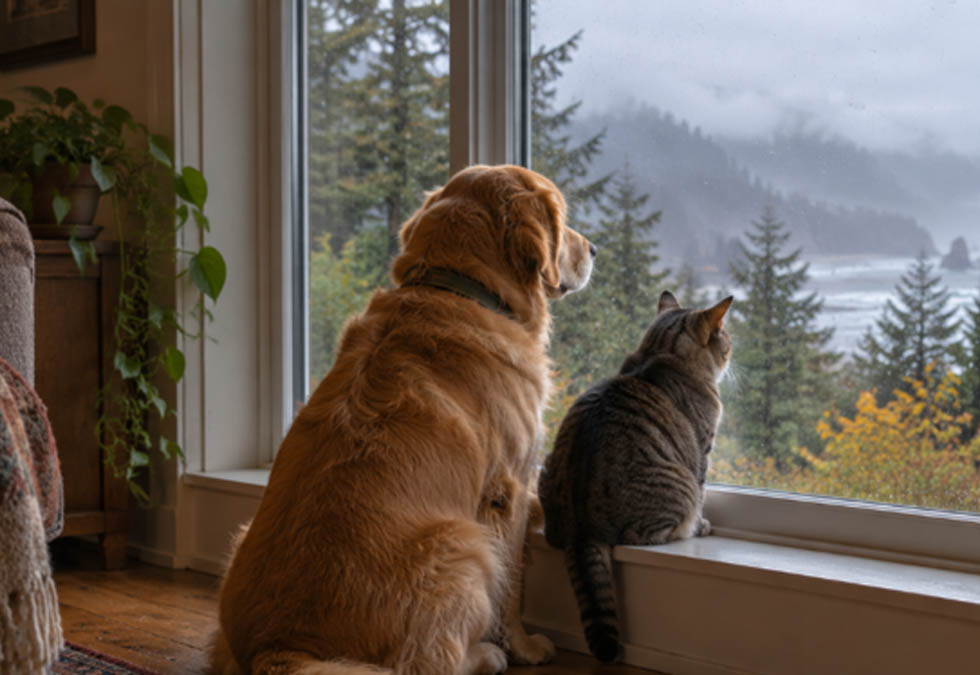
Fall brings hazards to our pets that can be easy to miss. A few simple precautions can help keep your dogs and cats safe throughout the season.
Stay Visible on Evening Walks
As fall days grow shorter, your evening walk may take place in darkness. Rain and fog can make it even harder for drivers to see you and your dog. Wear reflective clothing or a reflective vest and use a reflective leash or harness for your pet. A clip-on light adds visibility, while a flashlight helps you spot uneven ground and other hazards. Choose well-lit routes and keep your dog close.
Be Careful on the Beach
Sneaker waves can rush much farther up the beach than nearby waves, even when the ocean looks calm. They can also lift and roll heavy driftwood logs. Keep your dog close, stay away from logs near the water, and watch the ocean throughout your walk. Check tide tables and beach alerts before heading out and choose another walking spot when conditions are unsafe. These risks exist year-round, so keep beach safety in mind beyond fall.
Secure Poisons and Yard Waste
As rodents move indoors during cooler weather, people may put out mouse and rat poison. These products can seriously harm pets. Keep bait and stored packages out of reach and consider pest control methods that do not use poison.
Compost and moldy food are another concern. Keep compost bins closed and prevent pets from digging through food scraps or decaying waste. Mold toxins can cause serious illness, including tremors and seizures.
If you’re preparing your vehicle for colder weather, clean up antifreeze spills immediately. Antifreeze containing ethylene glycol can cause fatal poisoning in very small amounts.
Put Halloween Treats Out of Reach
Keep candy bowls, bags, and wrappers away from curious pets. Chocolate is toxic to dogs and cats, and xylitol, a sweetener found in some sugar-free treats, can be life-threatening to dogs.
If visitors or doorbells upset your pet, provide a quiet room away from the front door. This also helps prevent an escape while you greet trick-or-treaters
Skip the Thanksgiving Table Scraps
It can be tempting to share your holiday meal, but turkey skin, gravy, and other fatty foods can cause stomach upset, or a painful illness called pancreatitis. Cooked bones can splinter or cause blockages. Stuffing and other dishes may contain onions or garlic, which are toxic to dogs and cats.
Your pet’s regular food is the safest choice. If you offer a little turkey, make sure it is fully cooked, plain, and free of skin and bones. Ask guests to avoid feeding your pets, and secure the trash so leftovers, bones, and food wrappers stay out of reach.
Watch for Wild Mushrooms
Fall rains bring mushrooms to lawns, trails, and wooded areas. Some are poisonous, and it can be hard to tell which ones are dangerous. Check your yard regularly and keep pets from eating mushrooms during walks. If your pet eats a wild mushroom, call your veterinarian right away, even if your pet seems fine. Take a photo and, if possible, safely collect a sample for identification.
Keep Dogs Away from Raw Fish
Dogs may find dead fish or discarded fish scraps near coastal streams, riverbanks, and fishing areas. In the Pacific Northwest, certain raw fish can carry an infection that causes salmon poisoning disease, a potentially fatal illness in dogs. Don’t let your dog eat raw fish, fish remains, or bait. If it happens, contact your veterinarian promptly and explain what your dog ate.
Keep Up with Flea and Tick Protection
Cooler weather doesn’t mean fleas and ticks are gone. Fleas can survive year-round in Oregon’s mild climate. Continue the prevention plan your veterinarian recommends and check your pet for ticks after walking through grass, brush, or wooded trails. Always use a product that’s approved for your pet’s species and weight. Some dog flea treatments are dangerous to cats.
Know When to Get Help
If you suspect poisoning, call your veterinarian or an emergency animal hospital immediately. Don’t wait for symptoms or try to make your pet vomit unless a veterinary professional tells you to.
You can also contact ASPCA Animal Poison Control at 888-426-4435. A consultation fee may apply. Keeping these numbers in your phone can save time when your pet needs help.
This article provides general educational information and does not replace advice from a veterinarian.